Showing posts with label military. Show all posts

Saturday, December 13, 2025

Mindstar Rising by Peter F Hamilton (2011)


I have long admired Peter F. Hamilton's sprawling space operas. I usually steer clear of his work that includes psychic powers, fantasy, horror, or anything involving ESP, because the soft physics behind those elements bothers me. For that reason I had skipped the Greg Mandel series.

After a few disappointing recent reads in newer space opera, I decided to return to an author whose style I already trust. Mindstar Rising did not let me down.

The plot moves quickly and keeps delivering twists. The characters are engaging and easy to follow. The near-future setting—post-climate-collapse Britain—feels plausible and detailed. I especially liked the neural augmentations and the way Hamilton explores the boundary between human consciousness and machine intelligence. Those ideas are sharp and thought-provoking.
The psychic abilities remain the one part I could do without. They feel out of place in an otherwise grounded tech story. Still, they did not ruin the book for me.

Hamilton's writing pulled me through effortlessly. I have already started the next volume in the series. 5/5 stars.

Monday, November 17, 2025

StarGods: Star Carrier 9 by Ian Douglas (2020)

The book has minor flaws. Many characters ascend into "the Singularity," and political squabbles dominate much of the drama, action, and combat. Long-term security and the demands of perpetual vigilance are largely unresolved. The Enlightenment-era spirit of exploration is overshadowed by a seduction of utopic cyberspace.

Despite these issues, the novel succeeds as a conclusion. The storylines resolve convincingly within the universe Douglas built over the series. The characters remain engaging, and the scale of the narrative delivers the expected spectacle. 5/5 stars.

Thursday, November 6, 2025

Bright Light: Star Carrier 8 by Ian Douglas (2018)


I enjoyed this penultimate book despite all the annoyances. The expansion of the magical system feels arbitrary and contrivances for the plot. The repeated use of time travel and time dilation produces convenient but extremely inconsistent results. The world-building creates the largest gap. Earth and the Sol system remain the focus of every advanced species despite an earlier claim that the Sh'daar empire spans millions of species and quadrillions of people. The  trans-universal and post-singularity powers amplifies the mismatch. The setting becomes Sol-centric in a way that conflicts with the series' own premises.

However, the strengths hold the volume together. The characters maintain momentum. The plot lines converge. The sense of awe remains intact. The action keeps the story moving. The writing sustains a great pace. The result is a workable space opera that I found entertaining. 3/5 stars.

Wednesday, October 29, 2025

Dark Mind by Ian Douglas (2017)


This seventh book in the series pulls the story line up from its prior slump. Space opera tropes, including vast fleets clashing through interstellar regions of our galaxy blazed with fresh fire. I savored the new, inscrutable aliens tugging strings from the shadows, exposing layers of star gods and elder manipulators that mirrored L Ron Hubbard and Scientology's wild cosmology with Thetans plotting, Xenu, and the ancient "incidents."

The main character steered the human fight, making monumental decisions with bad data.  I enjoyed the gritty characters as they sidestepped plot twists with razor wit. Fleet clashes thrummed; close combat boarding raids checked the space opera box.

Alien tech pulverized humanity's defenses; I did not like the repetitive eleventh-hour saves because they were over-used. But the author made it all work.  What if galaxy architects juggle us as pawns? The reader grapples with free will trapped in scripted destinies, a cosmic horror twist. Douglas revived the saga for me. 5/5 Stars

Monday, October 20, 2025

Deep Time by Ian Douglas (1999)

This sixth book in the "Star Carrier" series is much better than the last one.  The fleet battles rage in fun space operatic fashion.  First-contact scenarios with inscrutable, cryptic aliens are intriguing and we are willing to suspend disbelief.  Even the time travel elements fail to detract from the plot and story arcs.  Heroic close-combat continues to pulse.  The awe-and-wonder space opera elements are all represented.  The big picture narrative of the invasion of our universe by beings fleeing their universe's heat death is wonderful.  Humanity deals with a civil war and forges pacts with space aliens amid existential battles. The story faces the "Singularity" question of whether the technology explosion will cause extinction or enable survival. Fun! 4/5 Stars.

Friday, June 13, 2025

Drone Factories Behind Enemy Lines

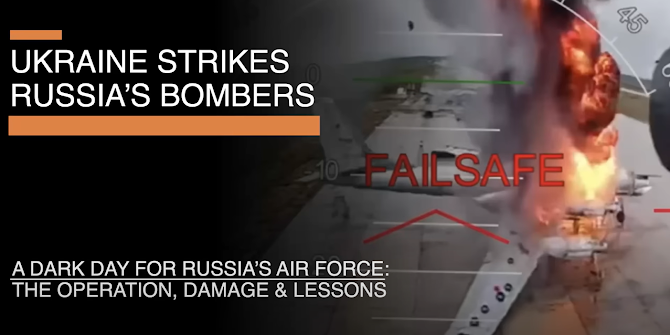
Ukraine created and remotely operated a weaponized drone factory inside Russia. Ukraine also contracted honest Russian freight companies to load and move trucks and later train cars containing autonomous self-deploying fleets of drones near Russian military targets.  A good analysis of the 20th century history of this type of asymmetric “behind enemy lines” tactic is here. And a great military economics and strategy analysis of the success of the operations is here.


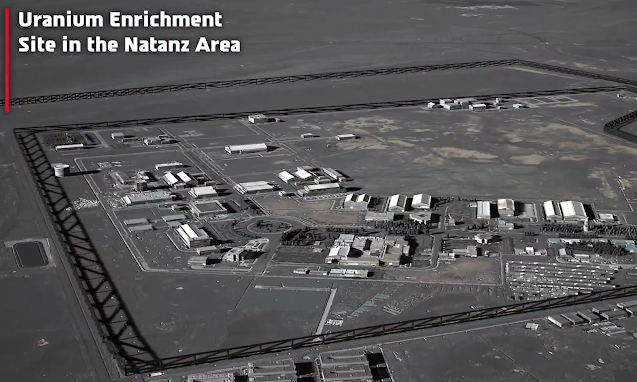
More recently, Israel created and remotely operated a weaponized drone assembly area as well as a missile assembly area inside Iran at a much longer distance (1,500 km).

Israel also coordinated suppression of enemy aerial defense (SEAD) with these vulnerable autonomous close-range weapon operations.


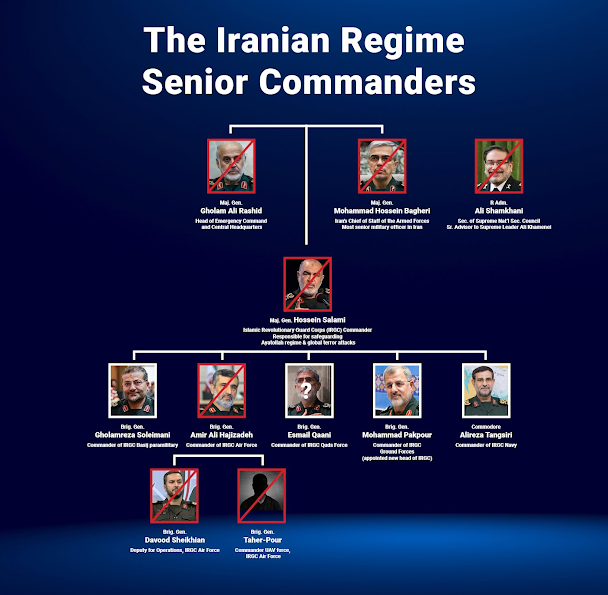
In addition, Israel targeted senior Iranian military leaders who were competent and successful at prosecuting their decades-long campaign to destroy Israel and murder all Israeli citizens. Iran has colonized much of Iraq, Syria, Lebanon, Gaza, and Yemen. Iran created powerful proxy armies in each of these areas. The Houthis in Yemen fought the US Navy to a stand-still (draw) and continue to keep Israelis in bomb shelters every day with their missile attacks. Hezbollah ruled Lebanon and had some success murdering Israelis with missiles; Hamas ruled Gaza, firing tens of thousands of rockets into Israel and murdering many Israelis. Hamas’ successful military invasion and massacre in October 2023 is another testament to the competence of these leaders in Iran.


I am curious about one particular aspect of these operations, namely the game theory, cognitive psychology, and longer-term strategy of the information each side in these conflicts releases as well as the timing of the information release.  Israel published the fact that some information released was intended to gather targeted leaders at the same location.


“We knew this would lead them to meet, but more importantly, we knew how to keep them there.”


So my question is, why would Israel publish this deception tactic?   Does Disclosing Manipulation Make Responses More Predictable or Manipulable?

Game Theory Perspective

In game theory, strategic interactions are modeled as games where players choose actions based on a payoff matrix that reflects the costs and benefits of their decisions. By publicly revealing their ability to manipulate and strike senior Iranian leaders, Israel effectively alters this matrix for Iran. The disclosure signals that Israel possesses superior intelligence and operational capacity, which Israel hopes will constrain Iran’s strategic options. For example, Iranian leaders might now prioritize protecting their remaining leadership, leading to defensive moves—such as dispersing key figures or fortifying command structures—that Israel could anticipate. If Iran perceives Israel’s capabilities as credible, their responses might become more predictable, as they react within a narrower set of choices designed to mitigate the revealed threat. However, if Iran suspects a bluff or seeks to challenge Israel’s resolve, they might opt for unpredictable counter-moves, complicating the outcome. Thus, game theory suggests predictability increases only if Iran’s leadership accepts the new strategic reality and adjusts rationally. Which AI models the psychology of the Iranian ruling counsel?

Military Strategy Perspective

Military strategy often employs deception, surprise, and psychological pressure to disrupt an adversary’s decision-making. Historically, targeting an enemy’s command structure—like Israel’s strike on senior leaders—aims to sow chaos and impair coordination. By disclosing this tactic, Israel may be engaging in psychological warfare, intending to demoralize Iran’s military and force its leaders into a reactive stance. If successful, this could lead to more cautious or standardized responses, such as adhering to established protocols, which are easier to predict. For instance, military doctrines often emphasize redundancy and pre-set contingency plans when leadership is threatened, potentially making Iran’s next steps more formulaic. However, this strategy risks backfiring if Iran interprets the disclosure as provocation and responds with unconventional or tactics intended to reduce predictability.

Psychological Perspective

My intuition—that paranoid, angry individuals are less predictable than calm, rational ones—is supported by some psychological research, that links heightened emotional states to impulsive or erratic behavior. However, the Israeli military’s disclosure might rest on a newer psychological hypothesis: under extreme stress or fear, people can revert to instinctual, habitual, or risk-averse patterns, making their actions more foreseeable. For example, surviving Iranian leaders, now aware of Israel’s lethal manipulation, might experience heightened paranoia or a sense of vulnerability. Their reactions would lead them to centralize decision-making, executing predictable operations, or over-rely on familiar, existing strategies—all of which could simplify Israel’s ability to anticipate their moves. Additionally, the stress of knowing they were outmaneuvered might induce “analysis paralysis,” where overthinking limits Iran’s flexibility, inadvertently making their responses even more manipulable. While evidence isn’t definitive, studies on stress responses (e.g., in crisis decision-making) suggest that extreme pressure can sometimes narrow behavioral options, supporting the idea that disclosure could enhance predictability under specific conditions.

Other Advantages of Disclosing This Information

Beyond influencing predictability, Israel’s public statement offers a few strategic benefits:


Deterrence: By showcasing their ability to orchestrate events and eliminate key figures, Israel signals to Iran that further aggression could invite similarly devastating strikes. This raises the perceived cost of escalation, potentially deterring offensive actions.


Psychological Warfare: The disclosure could erode morale among Iran’s military leadership, fostering distrust or fear of internal leaks (e.g., how Israel knew where and when to strike). This psychological pressure might weaken Iran’s cohesion, giving Israel an edge.


Signaling Resolve: The statement demonstrates Israel’s willingness and capability to act decisively, which could bolster domestic support, reassure allies, or justify their operations to the international community.

Risks and Caveats

While these advantages are compelling, the disclosure carries risks. It might provoke Iran into retaliating aggressively, especially if leaders view their setback as a public humiliation. Alternatively, Iran could adapt by enhancing security measures for their leaders—such as avoiding predictable gatherings—making future strikes harder. The effectiveness of this strategy hinges on how Iran’s leadership interprets and reacts to the revelation.

Conclusion

There is no conclusive proof that disclosing intentional manipulation makes an enemy’s responses more predictable or manipulable, but principles from game theory, military strategy, and psychology suggest it’s plausible under certain conditions. Game theory indicates that revealing capabilities could limit Iran’s strategic options, military strategy highlights the potential for disruption and reactive behavior, and psychology posits that stress might constrain decision-making patterns. Alongside these effects, the disclosure serves broader goals like deterrence and psychological warfare, though it risks escalation or adaptation by Iran. Ultimately, the success of this approach depends on how Iran’s leaders process the new reality Israel has imposed.


Saturday, December 23, 2023

Aftermath: Expeditionary Force 16 by Craig Alanson (2023)


Fantastic resurrection to this fun series.  Hilarious, mindless entertainment. 5/5 Stars

Saturday, December 2, 2023

Callsign Valkyrie by Jason Anspach, Nick Cole, Walt Robillard (2023)


Self-contained, backstory of factions during the reign of the evil "House of Reason" era of Galaxy's Edge. Not bad. 4/5 Stars.

Thursday, November 23, 2023

Always Legion by Jason Anspach, Peter Nealen, & Nick Cole (2023)


I needed something light, fun, humorous to recover from that terrible Peter H Kim book.  This one is a little disappointing; the close combat is good as always. This era and setting in the Galaxy's Edge universe is dark and depressing, though.  3/5 Stars.

Sunday, August 27, 2023

Wayward Galaxy 6 by Jason Anspach & Nick Cole (2023)


Hilarious, silly, fun, light, entertaining, mindless mayhem 4/5 Stars.

Saturday, August 19, 2023

The Red by Linda Nagata (2015)


The plot and mystery are well-executed.  And the characters are wonderful.  The characterization of political power, relative military capabilities, and oligarchical powers is not very believable, unfortunately.  But the good writing enabled me to suspend disbelief and enjoy the story. 4/5 Stars.  I'll read the rest of the series now.

Saturday, August 12, 2023

Never Shall I Fail by Jason Anspach & Nick Cole (2022)


I am enjoying the series and look forward to each new volume; I particularly liked the ending of this book, 5/5 Stars.

Sunday, July 9, 2023

Red Ice by William C Dietz (2018)


Some work colleagues recommended this series and lent me the first one; it's ok, but not great.  And recent events make the entire plot line ridiculous. 3/5 Stars.

Sunday, July 2, 2023

Freefall (Expeditionary Force Mavericks) #2 by Craig Alanson


Fun story; next time I start a series I shall read the books in publication order. 4/5 Stars.

Saturday, June 24, 2023

Death Trap by Craig Alanson (2019)


Taking a break from deep, dense fact books that are popping up in my stack, I took a break with some light reading and went back to read the last two Craig Alanson books in his "Expeditionary Force" universe.  I think one should read them in publication order because the last two books in the main "Expeditionary Force" series have some spoilers and assume you have read these two "Mavericks" books.  But this one was still fun; the characters and dialogue are in many ways funnier than the main series. 4/5 Stars. Entertaining.

Sunday, May 28, 2023

Failure mode, expeditionary force, book 15 by Craig Alanson (2023)


Fun conclusion to the series, but I was disappointed in the "elders" confrontation at the very end.  Otherwise, the story was fun. 4/5 Stars.

Match Game (Expeditionary Force #14) by Craig Alanson

The story is suddenly drawing to a close; the stakes get much higher and some of the mysterious, ultra-powerful tech, e.g. another "elder AI" are involved.  Fun.  There are way too many loose ends to wrap up, however.  So the final volume will likely be disappointing. 4/5 Stars.

Fallout (Expeditionary Force #13) by Craig Alanson

The adventures continue; I am reading quickly to get to the end of this series. Mindless, silly sarcasm and cheesy space opera. 3/5 Stars

Saturday, May 6, 2023

KTF Part 2 by Jason Anspach & Nick Cole


Fast moving story trying to tie together many separate plot lines and make the rest of the "big reveals" to end this chapter of the story.  Although a fair number of the main characters died, I think the authors should have killed off more of them to end the story.  3/5 Stars.

The Pursuit of Power by William H McNeill (1982))

I normally don't enjoy these dense, phonebook-long history textbooks with too many names, dates.  But this book is fantastic; there is never a dull moment.  It is deeply insightful and posits the author's theories of larger, sociological nation-state behaviors not only of the leaders but the populations.  5/5 Stars.  I am grateful someone at work recommended the book.